… in the Minneapolis Star Tribune notes that the most charitable description of what’s been going on at the clubby University of Minnesota medical school would be “bizarre.”
Thursday, February 10, 2011

(U of M president to wear tuition cap?)
Bill to freeze tuition gets cold shoulder
from University of Minnesota and MnSCU
Administration
Administration
From the Star-Tribune
The U and MnSCU say the bill is bad policy and will erode the quality of the education they provide.
A few state senators want to freeze tuition at Minnesota's public colleges and universities -- then limit tuition increases forever.
Few? This may be wishful thinking.
Sen. John Carlson, R-Bemidji, introduced a bill Wednesday that would freeze tuition for two years at the Minnesota State Colleges and Universities (MnSCU) and University of Minnesota and keep all future increases below the annual percentage increase of the Consumer Price Index.
While the bill could affect MnSCU schools, the U has a separate constitutional status and would not have to comply.
As a practical matter, the U would have to comply. If they want to get legal, maybe that should be fixed as has been done in other states.
The bill would force the two public higher ed systems "to make true structural reform to push revenue into the classrooms and reduce administrative overhead," Carlson said in a statement. It has the support of Sen. Michelle Fischbach, R-Paynesville, chair of the Senate's higher education committee.
The two state education systems oppose the bill -- not because they don't want to keep tuition low. They do, they said. But they said a freeze would tie their hands in dealing with another round of potentially deep cuts to state funding, diminishing the quality of education they provide.
They want to keep tuition low? So why didn't they when they had the opportunity to do so. The U has espoused a high tuition/high aid model that was a serious mistake.
U President Robert Bruininks called it "a very bad bill" that could force the university to eliminate programs, reduce enrollment and cut need-based aid.
This is an unfortunate reaction because it sounds like a threat - we will take it out on the students. Stupid thing to say.
"It looks like this is an attempt to make college more affordable," he said by phone, "but it would leave us no alternative but to erode the resources we provide now for low- and middle-class students." The U has made significant cuts to deal with falling state funding, he said, but "it is reasonable for tuition to be part of the solution."
The financing at the U is deliberately inscrutable and there is no easy way to tell whether tuition increases actually go to the education of students. They may very well continue the entrenchment of administrators or subsidize research under the table. These matters have been discussed often on this blog. And yet Dr. Paller responded very recently to the fact that NIH funding may go down by stating that the U should hire more (research ?) faculty. The cluelessness of the current administration at the U is breathtaking. Let us hope for serious changes under the new president.
MnSCU voiced similar concerns.
"The Legislature gave the board the authority to set tuition in the first place because the trustees can look at the whole picture," said spokeswoman Melinda Voss. "They can balance the interests of the students and the state's need to prepare more graduates and all the things the board has to take into consideration."
The Minnesota State College Student Association does not support a tuition freeze. But it does support the Legislature setting a cap on tuition.
In fact, hours before the tuition freeze bill gets its first hearing Feb. 16, students will rally at the Capitol, wearing red hats that say "S.T.O.P" -- student tuition is overpriced.
Make sure that President Bruininks gets one of these hats...
"Tuition caps," if you will


Wednesday, February 9, 2011

Regents play innocent
The regents are acting like Dan Markingson’s suicide never happened.
In a letter released Monday, the University of Minnesota Board of Regents dismissed a request from eight bioethicists for an independent investigation of the case of Dan Markingson, who committed suicide after being enrolled in a University psychiatric research study.
One of the leaders of that study, Stephen Olson, was Markingson’s doctor, but he also received consulting fees from the study’s sponsor, AstraZeneca. His obligation to the study and its corporate sponsor could have caused him to overlook his patient’s safety. The University made $327,000 from the study, $15,000 of which came from recruiting and retaining Markingson as a subject in the study, despite repeated requests by his mother for him to be released.
Of course, the University has maintained neither it nor anyone involved in the case did anything wrong, an odd claim to make after the Minnesota Legislature unanimously passed a law that prohibits exactly what happened and named the law after Markingson.
The University seems to think that because it was not held liable in court for Markingson’s death, it did nothing wrong. This is false; it is a cynical excuse to keep corporate drug money flowing into the University.
The regents’ decision fundamentally undermines our mission: Supposedly, the University is “dedicated to … the search for truth.” But the letter makes it clear that corporate research cash is more important to the University than patient safety and transparency.Refusing to set up an independent investigation is a willfully ignorant attempt to sweep the Markingson case under the rug and damages the integrity of the entire University.

Surprise, Surprise...
President Bruininks Does Not
Lke University of Minnesota
Tuition Freeze
1. It's a "very heavy-handed form of micro-management." The Legislature elects the U's governing board, and they ought to let that board "take responsibility for setting tuition. That responsibility is codified in the state's charter."
2. "There is absolutely no way we can substantially cut the budget, freeze tuition and continue to provide the kind of education, research and outreach our citizens expect." The bill would "force the elimination of entire parts of the university and cause deep erosion in the quality of what we do."
3. It would have "a devastating impact on students. We would have to consider reductions in enrollment... Courses would have to be cut. Students would face much more difficulty graduating on a timely basis."
4. The bill would result in cuts to financial aid. "It looks like this is an attempt to make college more affordable, but it would leave us no alternative but to erode the resources we provide now for low- and middle-class students.”
5. The bill limits future increases to the annual Consumer Price Index, "a deeply flawed statistic." "It does not include labor... and of course, we spend 70 cents on the dollar on labor."

Tuition freeze at University of Minnesota
and other state schools?
SENATOR JOHN CARLSON INTRODUCES HIGHER EDUCATION TUITION FREEZE
(ST. PAUL) – State Senator John Carlson (R-Bemidji) introduced legislation today that calls for a temporary freeze and permanent tuition increase limitations for the Minnesota State Colleges and Universities (MnSCU) and University of Minnesota institutions. The bill, Senate File 268, would put in place a two-year tuition freeze and an increase limitation thereafter.
Senator Carlson, a member of the Senate Higher Education Committee, said Wednesday, “In our current financial crisis, we must seek responsible government reform. With this bill, our Minnesota State Colleges and Universities and University of Minnesota systems will need to make true structural reform to push revenue to the classrooms and reduce administrative overhead.”
Senate File 268 calls for a tuition freeze at Minnesota State Colleges and Universities and University of Minnesota for academic terms commencing between July 1, 2011, and June 30, 2013. After that two year period, tuition increases from one academic year to the next may not exceed the annual percentage increase in inflation.
The bill was referred to the Senate Committee on Higher Education. The first committee hearing on Senate File 268 is scheduled for Wednesday, February 16 at 3:00 pm.
Senator Carlson is scheduled to speak with college and university students during Student Day at the Capitol on Wednesday, February 16. The group will gather at the Capitol steps at 11:30 a.m.
Tuesday, February 8, 2011

University of Minnesota
You Can Run, But You Can't Hide
Nearly seven years ago, 26-year-old Dan Markingson killed himself while participating in a clinical trial at the University of Minnesota, where researchers were studying the Seroquel antipsychotic. And the circumstances surrounding his participation and subsequent death led to widely publicized allegations that the university put its own interests ahead of the patient.
How so? One reason - an academic researcher also consulted for AstraZeneca, which markets the pill and sponsored the study. And the researchers were allegedly under pressure to bolster enrollment. These details emerged following a lawsuit filed by Markingson’s mother, who objected to her son’s participation because he was already mentally ill and possibly incompetent, but was enrolled anyway (background here).
Her lawsuit went nowhere, as did a complaint to the state medical board about one researcher, Charles Schulz, who has denied any wrongdoing (more detail here). Yet a group of eight university bioethicists recently wrote the university’s Board of Regents to complain that the school failed to properly monitor the situation and to demand that an independent board should probe the episode.
Now, the school has exonerated itself. In a letter sent by the Regents to the bioethicists, the school determined there was no “improper or inappropriate” care provided to the patient and there was no evidence of misconduct or that any laws or regulations were violated (read the letter). And the Regents noted the FDA, the Minnesota Attorney General and the Minnesota Board of Medical Practice had previously conducted investigations and reached the same conclusion.
A central issue was the extent to which Markingson’s participation contributed to his suicide. The researchers and the university maintained he had actually begun to improve prior to his death. “Not withstanding (his mother’s) belief, there is simply no evidence that Mr. Markingon’s death was causally connected to his participation” in the study, wrote university general counsel Mark Rotenberg, in a separate letter to the same bioethicists. His office conducted the university probe.
Can you say: conflict of interest?
The circumstances in which Markingson wound up in the study were central to the controversy. Back in 2003, he suddenly exhibited troubling behavior and threatened his mother before he was briefly committed involuntarily to a mental institution. To avoid remaining there, he was placed in the university trial, although just before that occurred, this same physician reportedly indicated in a court petition that he was dangerous and mentally incapable of consenting to taking antipsychotics.
As his mother, Mary Weiss, wondered: How could her son suddenly be capable of consenting to a participation in a research study while he was in a state mental institution? A report written in Mother Jones by Carl Elliott, one of the university bioethicists, suggested the researchers were under pressure to bolster enrollment in the trial.
This same report also noted that patients experiencing their first psychotic episode are at higher risk of killing themselves or other people. “For this reason, most studies of antipsychotic drugs specifically bar researchers from recruiting patients at risk of violence or suicide, for fear that they might kill themselves or someone else during the study,” he wrote at the time.
And the angels wept. I am ashamed of my university..
University of Minnesota Regents
refuse to reopen case of suicide in drug study
See no evil, hear no evil, do no evil?
Patient agreed to take part to avoid being committed.
The University of Minnesota's Board of Regents has turned down a request by eight professors and ethicists to review events surrounding the suicide of a participant in a clinical psychiatric drug trial.
In a letter released Monday, the board noted that the 2004 death of Dan Markingson was reviewed, without sanctions against the U, by the U.S. Food and Drug Administration, the Minnesota Board of Medical Practice and the state attorney general's office.
While noting the tragedy of the death, the letter stated, "we do not believe university resources should be expended re-reviewing a matter ... which has already received such exhaustive analysis by independent authoritative bodies."
Markingson was enrolled in a drug trial comparing the effectiveness of medications for patients with schizophrenia. The U of M was just one site for the national study, funded by drugmaker AstraZeneca.
The recruitment of Markingson troubled the bioethics professors, including Carl Elliott, who wrote about the case last year in Mother Jones magazine. To avoid commitment in a locked institution, Markingson agreed to an outpatient commitment and to a court order requiring him to follow the instructions of his doctor. That doctor, psychiatrist Steven Olson, was also the leader of the drug study in which Markingson was then enrolled.
The professors weren't alone in their criticism. Minnesota's mental health ombudsman questioned the recruiting practice. The Legislature has since banned patients under civil commitments from being able to consent to medical research.
JEREMY OLSON
And the angels wept...
Monday, February 7, 2011

Did the University of Minnesota allow
Nemeroff to put in the fix for Schultz?
Was Nemeroff Consultant to Search Committee?
The University of Minnesota’s drug trial problems broaden.
Bernard Carroll says: February 4th, 2011 at 2:29PM I remember hearing that The University of Minnesota engaged Charles Nemeroff as a consultant to the search committee for the chair of psychiatry. At the time Nemeroff’s compromises had not been exposed and he was seen as something of a kingmaker. He was even referred to as Boss of Bosses. Nemeroff is said to have put in the fix for Charles Schultz. So who is surprised when questions about compromise arise in connection with Schultz as well?
Friday, February 4, 2011

Why Mitch P Berg
Should Shtick to Talk Radio
Mitch P Berg is a right wing squawkradio host who has Limburger envy. He plies his trade on Saturdays with an audience of fawning acolytes. He is also a copious tweeter with more than 10K inane 140 character flames to his discredit. As a one-time English major he bloviates frequently on a blog entitled: A Shot in the Dark [sic]. There he regularly shoots himself in the foot. I hope he is more careful, as I wouldn't want Scarlett to be disappointed... Mitch was described in this film clip as a political analyst which is like calling Michelle Bachmann a historian.
===
Thursday, January 27, 2011
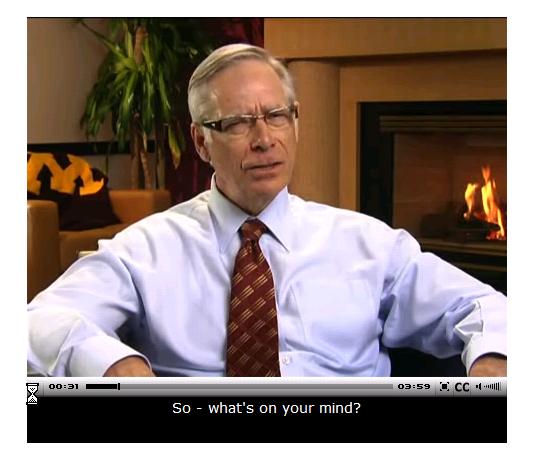
Why can't a woman, be more like a man?
The University’s athletics department has been sued by former golf coach Katie Brenny. What sort of internal investigation is being conducted, and how do you think the incident reflects on the athletics department?
I was saddened to see this development. I can’t comment on the case at hand specifically, but I can assure you there’s been a very strong internal assessment, and we’ll try and learn from this experience and do everything we can to make sure similar circumstances don’t occur in the future.
Two words: Jimmy Williams
I don’t have an opinion on the facts right now because it’s still very much in discussion and negotiation, but it always saddens me when things don’t work out.
You could have solved this problem in a day and saved the U a lot of bad PR.
It's called leadership, Bob.
I’m very hopeful hat we’ll resolve this difference and move forward and learn from it.
The present Morill Hall Gang has proven incapable of learning from such horrible decisions. Hopefully the next administration will do a much better job and the U will not be left twisting in the wind for so long. This was totally unnecessary.
Monday, January 24, 2011

Friday, January 21, 2011
More on Unreimbursed Research
Costs at Public Universities
The UC Example
Same Old Wrong Claim that the Humanities and Social Sciences Lose Money.
"We roughly have a $20-billion budget; $3 billion comes from the state. That's the English department, the Spanish department, economics -- that have difficulty generating the big outside grants. I love the humanities; I'm a creature of the humanities. But the engineering colleges are going to bring in more external research support, and that money's crucial."
Mais non, c'est faux! In fact, the big outside grants lose money, and are supported in part by cross-subsidies from high-enrollment fields in and out of the science and engineering fields that bring in big, important, and yet very costly grants.
UC has officially acknowledged this. For example, the third sentence of a Regents's item in November 2010 reads, "The UC system incurs $600 million in unreimbursed indirect costs every year."
A San Francisco Chronicle report on the original UCOF discussion of this issue put the figure at $720 million on $3.5 billion in research revenues, or a loss of about 20 cents on the research dollar.
The Academic Senate's indirect cost recovery report calcuates that ICR is about 25% while true indirect costs "appear to be in the 65-70% range" (p 5).
Mark Yudof's repeated misstatement on this has at least two bad outcomes:
(1) it undoes emerging public awareness of why education is so expensive;
(2) it undoes emerging awareness among scientists that they are not huge profit centers for the university.
Science research should have more funding, not less (as should the social sciences, arts, and humanities, which are pitiful also-rans).
But research should be fully funded and thus not damage the finances of struggling public universities.
If Mark Yudof can't be clear about this, how can we find any of the $500 million in internal savings we will need six months from now?

Because...
So What Really Happened
at University of Minnesota Pep Rally?
In an attempt to gin up support for the U at the state lege, President Bruininks presided over an annual Grass Roots (supposedly) at the Mac ealier this week. I usually attend the fun and festivities, but this year was unable to do so. Fortunately, my friend Michael McNabb attended and sent me this description:
{emphasis mine}
This evening I attended the 2011 legislative briefing presented by the U of M at the McNamara Alumni Center.
The first item on the agenda this year was having your photograph taken while you were holding a "Because" advertising slogan. (You had to do this in order to receive your ticket for your dinner!)
[Added later: Michael was a good sport. His mug shot is below. Note the slogan.]

The U of M Legislative Network will send this modified mug shot to your state representative.
During the dinner a "Because" film was projected on the large screen monitor in the main hall. There was no mention of how much the U is spending on this new public relations venture in addition to the more than $4,400,000 (yes, $4.4 million) that was devoted to the "Driven to Discover" advertising campaign. See item (2) in Financial Stringency at http://www.ptable.blogspot.com/2010/03/financial- stringency-must-be-declared. html. One might digress here to discuss priorities in a time of "financial stringency," but we will continue with our description of the briefing.
The MC then introduced the five regents who made it to the briefing and the one and only state legislator who was in attendance.
Then Peggy Flanagan delivered an effective keynote address. She is a member of the Ojibwe tribe, and she is the director of the North American Leadership Program for Wellstone Action. As a young Indian woman she struggled in high school, but she blossomed at the University when her professors took an interest in her and encouraged her. She graduated Phi Beta Kappa in 2002 with a major in Indian studies. In 2004 she became the first Native American to be elected to the Minneapolis school board. She asked the alumni to contact their state representatives. She asserted that a face, a story, and a personal connection would be more effective with the legislators than facts and statistics.
Then she introduced President Bruininks. He graciously acknowledged that Peggy had described an effective way to communicate with legislators through personal stories of the difference that the University has made in our lives. He could have stopped at that point.
Instead, we heard the following refrains:
* Organizations rise to the level of their expectations and aspirations. An organization that aims for less will settle for less. He then quoted the inscription that is carved above the entrance to Northrop Auditorium.
* In 2003 the regents decided to undertake an ambitious journey that would "transform" the University into one of the top public universities in the world. Some may have skepticism about this goal, but is important to aspire to such a stature and not simply a ranking. (He did not explain how you achieve one without the other.) This transformation would be about "deep" values and would result in a sense of pride but not arrogance.
* Applications have more than doubled for the freshman class. There is a better academic profile for the freshman class. The percentage of students who graduate in four years has doubled. The University is awarding 7,000 degrees each year in science, math, and technology.
* In the past nine years the average price for an undergraduate education at the University has increased just 3% per year because financial aid has doubled. (He did not describe how much of the financial aid is in the form of loans.)
*The University now ranks in the top 10 research universities in the nation. (Apparently ranking is important.) In 2010 the University received $823 million for research from outside sources. (He did not discuss the costs of research. See On The Hidden Cost of Research at http://www.ptable.blogspot.com/2010/12/on-hidden-cost-of- research-michael.html#links. ) This research creates more than 25,000 jobs each year. (He did not cite the source for that claim.)
*The new federal legislature is discussing deep cuts in Pell grants and in research funds from the National Institute of Health. This would change the partnership between the federal government and universities that has existed since the end of World War II.
*The future of the State of Minnesota depends on a culture of innovation. The administration has delivered on the mission to be a top public university.
*Governor Elmer L. Anderson recognized the importance of setting high aspirations. Anderson would use a quote from Robert Browning that a man's reach should exceed his grasp. We must have Great Expectations and reach for the stars. (The president did not inform the alumni that in November he told the Faculty Consultative Committee that we must first reach to be in the top three land grant universities in the nation. See http://www.ptable.blogspot.com/2010/12/university-of- minnesota-president.html#links . )
Michael W. McNabb
Attorney at Law
Unfortunately, the President had to face the music at the state legislature the next day. They just said no, in committee, to his song and dance. The same song and dance that he has been performing for years. He even had to diss the Daily in answering questions about why he had not delivered on his promises to significantly prune administrative costs and blew the question off as being a minor contributor to our problems.
Time for a change, Mr. President? For some concrete suggestions, please see my post on the Star-Tribune Voices blog: Research and Educational Expenses at the University of Minnesota: Time to Put All the Cards on the Table?
Fortunately we will see no more of this president's failed attempts to make proper justification to the legislature for state investment in the U. Hopefully, the next president will be a great improvement in this area as he has already pledged to meet with every member of the state legislature. He seems to be the kind of leader who walks the talk, judging from his record at Stony Brook and Delaware. I look forward to his leadership in moving the University to be one of the best institutions of its kind and not pursuing the false god of "third greatest public research university in the world."
Wednesday, January 12, 2011

For It's One, Two, Three Strikes You're Out!
(except at the University of Minnesota?)
A reader points out in the comments section of my previous post:
Strike One: The Minnesota Supreme Court rejects the arguments of the U of M general counsel and rules that the state Data Practices Act and Open Meeting Law do apply to the University. Star Tribune Co. v. University of Minnesota Board of Regents, 683 N.W.2d 274 (Minn. 2004).
Strike Two: The Minnesota Court of Appeals rejects the argument of the U of M general counsel and rules that the decision of the U of M provost in a student disciplinary proceeding was arbitrary and capricious and denied due process to the student. Berge v. University of Minnesota, 2010 Minn. App. Unpub. Lexis 1002 (September 21, 2010), review denied, 2010 Minn. App. Lexis 704 (Minn. S.Ct. December 14, 2010).
Strike Three: The United States Supreme Court rejects the argument of the U of M general counsel and rules that the University must make FICA (social security) payments on the stipends of medical residents. Mayo Foundation & Regents of the University of Minnesota v. United States, No. 09-837 (January 11, 2011).
I will also point out that the advice - presumably there has been some - of the General Counsel's Office on the Jimmy Williams affair and the upcoming suit by a former female golf coach has also been egregiously wrong.
Time for a new manager in the General Counsel's Office?
Tuesday, January 11, 2011
Once Again, University of Minnesota
General Counsel Takes It On The Chin
I've written before about this sorry performance by the U of M in trying to deny contributions to the retirement funds of residents.
See for example:
“It’s a lot of money every year out of our budget that we’d be able to either put into the pockets of the residents themselves or save,” Rotenberg said.
“We believe that our case is highly meritorious,” Rotenberg said. “We’re very pleased that the Supreme Court justices will give this case a very close look now.”
What a turkey...
Medical Schools Must Pay Social Security Taxes for Residents, Supreme Court Rules
The U.S. Supreme Court ruled unanimously on Tuesday that medical schools must consider their residents as employees, not students, in a decision that will cost the institutions an estimated $700-million in federal taxes annually.
The ruling, written by Chief Justice John G. Roberts Jr., ends a longstanding dispute over whether medical colleges must pay the employer's portion of taxes for Social Security and Medicare for their residents.
Colleges generally do not have to pay the taxes, called FICA, for students who work at the institutions. In the past, that policy has also been applied to medical residents at teaching hospitals, even though they often work well beyond 40 hours a week.
The case, Mayo Foundation et al. v. United States, No. 09-837, involved the Mayo Clinic, in Rochester, Minn., and the University of Minnesota, which won a federal district-court ruling in 2008. In that opinion, the judge found that rules issued by the U.S. Treasury Department in 2005, excluding full-time medical residents from the student exception, were invalid because they were contrary to the law that created the Social Security system.
A three-judge panel of the U.S. Court of Appeals for the Eighth Circuit overturned that decision in 2009, saying the exception for students was meant only for those who worked part time while attending classes, but not medical residents, who are basically full-time employees of the teaching hospitals.
But on Tuesday the Supreme Court said quite simply that the Treasury Department's rules about student employees are a valid interpretation of the federal tax laws and deserve legal deference.
"The [Treasury] Department reasonably sought to distinguish between workers who study and students who work," the court ruled. "Focusing on the hours spent working and those spent in studies is a sensible way to accomplish that goal. The Department thus has drawn a distinction between education and service, not between classroom instruction and hands-on training."
Yes, Counsel Rotenberg, it was all about saving the students the money. No it was all about the U not having to pay FICA.
As one of our former residents aptly put it:
Make no mistake about this...this decision is not about hurting the residents...Basically, the U of M and most academic medical centers have been screwing residents and fellows out of their retirement benefits in order to save money.
Former U of M Resident

Former State Representative Brod
praises Top 3 goal
in interview for University of Minnesota
Board of Regents Seat
Former state Rep. Laura Brod, a Republican, began her interview with a bold statement: The University of Minnesota's goal to be one of the top three public research universities in the country is "absolutely fantastic and attainable."
From a commenter on this post:
For starters, let's talk about what we'd be looking at to accomplish this goal.
The U is currently barely within the top 25 public universities under the US News rankings, the system (for better or worse) that almost everybody references.
So you'd be looking at jumping at least 20 rankings to become one of the top three. Do you know what the movement in those rankings has been, historically? Berkeley, UCLA, UVA and Michigan have pretty much been the top 4 since the rankings' inception a couple decades ago. In fact, the U is now half-a-decade into this "top three" plan and the U's overall ranking actually went down from last year to this year (from 61st overall to 64th). So good luck on making the "top three," particularly within the next 5 years as Bruininks plan promised.
What are some of the factors that influence the rankings?
One is 4-year graduation rate. UVA's 4-year graduation rate is around 75%. The U's is under 50%.
Another is student caliber. By the U's own comparison with "peer universities" it ranks at or near the bottom in median SAT/ACT scores, % of students in the top 10% of their class, etc. And these peer universities are a mix of the current top 10 publics and some outside it (e.g., Texas, OSU, etc.).
Absent significantly cutting back on admissions, it's hard to see how the U could get a student caliber ranking to match the likes of UVA, Berkeley (where almost 99% of undergrads were in the top 10% of their high school graduation class), etc.
A large chunk of the ranking is based on reputation. Here there is little the U can do. It's not based on numbers, although having a large number of faculty members in the NAS can help (and here the U is far, far below the current "top three"). For the most part it's based on long-entrenched reputations for excellence that are difficult to shake or to overcome. The people filling out these forms have often stated that they aren't really qualified to making yearly assessments of which university is the "best," which only further entrenches the existing powers. Berkeley and UCLA will always be Berkeley and UCLA.
Just as Harvard and Yale will always be Harvard and Yale. The U is a fine university, and if this "top three" nonsense wasn't shaping spending in harmful ways it would simply be silly rather than silly and harmful. But in the pursuit of this goal, the administration has engaged in unnecessary campus construction and radically expanded the bureaucracy while raising resident tuition, dramatically lowering non-resident tuition, and gutting departments and programs that fulfill the educational mission of the university.
I couldn't have said it better...
+++
Friday, January 7, 2011

Censoring Twain
or,
Stop me if you've heard this one before...
The chattering classes - mostly on the left and right coasts - are all Gaga over the latest attempt to sanitize Twain. For some background and discussion, please see:
"Censoring Twain" - on the Chronicle of Higher Education Brainstorm Blog
and
"Do Word Changes Alter Huckleberry Finn" - On the New York Times Room for Debate
From the Project Gutenberg Version of "The Adventures of Huckleberry Finn":
"It warn't the grounding--that didn't keep us back but a little. We blowed out a cylinder-head."
"Good gracious! anybody hurt?"
"No'm. Killed a nigger."
"Well, it's lucky; because sometimes people do get hurt.
Now Twain knew exactly what he was doing here, even ET or Michelle Bachmann might get the message.
But it is complicated, as Paul Butler, a former federal prosecutor, who is associate dean and the Carville Dickinson Benson Research Professor of Law at George Washington University, put it:
It’s complicated, “nigger” is. I suffered through Huckleberry Finn in high school, with the white kids going out of their way to say “Nigger Jim” and the teacher’s tortured explanation that Twain’s “nigger” didn’t really mean nigger, or meant it ironically, or historically, or symbolically. Whatever. I could live my whole life fine if I never read that book again.
His colleague, Professor Margaret Soltan at GWU noted:
“I’m a Jew and an English professor. If I were so hurt and offended by every use of the word ‘kike’ and similar slurs — in a work of art that I refused to engage with the work, I’d not only be unemployed; I’d be an idiot,” Soltan told TheDC.
“You cannot grasp Huck’s ethical transformations in Twain’s story without first grasping the truth of his attitudes as they express themselves in his speech.”
Soltan told TheDC that it’s probably a good thing if readers are offended by the term in Twain’s text because then they will have a strong understanding of the slur’s offensive implications.
“If his speech upsets you, that’s arguably all the better, since your response dramatizes the violence of the word, and the harsh reality of the attitudes it conveys,” Soltan said.
+++
Wednesday, January 5, 2011
Jobs and Taxes in Minnesota
For most Minnesotans, Osceola, Wis., is a place to stop for a burger or gas on our way to or from somewhere else.
More recently, though, the quaint rural village perched atop the bluffs of the St. Croix River has become a microcosm for the global economy.
Polaris Industries, the Medina-based recreational vehicle maker that has operated in Osceola for 19 years, announced in May that it will close its plant and shift operations to Mexico. The layoffs begin in March, and eventually the region will say goodbye to 500-plus jobs that pay an average wage of about $16 an hour, plus benefits.
For decades, western Wisconsin feasted on Minnesota firms looking for cheaper places to set up shop. The Badger State dangled lower rates for everything from corporate income taxes to workers' compensation.
My comment:
This story also illustrates a point. No matter how low taxes are, they will always be lower elsewhere. So calling for cutting them to stimulate jobs is ultimately a losing proposition. Consider the fact that so-called high tax states are where the biotech jobs are, as pointed out by Thomas Lee and Bill Hoffman. Lowering business taxes indiscriminately is not the answer. Investment tax credits and investment in high-tech start ups needs more attention right now than simply cutting taxes, as there is no incentive for these cuts to be used for job creation.
posted by wbgleason on Jan. 5, 11 at 6:44 AM |

Clueless in Morrill Hall
(#lessambitiousmovie)
From the Pioneer-Press:
Starting Tuesday in the legislative session, the $6.2B deficit will dominate the show.
Minnesota Republicans insisted throughout the 2010 campaign that they could erase a projected $6.2 billion deficit in the state budget without increasing taxes.
"We're going to live within our means," House Speaker-designate Kurt Zellers, R-Maple Grove, said repeatedly.
Now he and his fellow Republicans, who won control of both houses of the Legislature in November, are going to get a chance to prove it.
Republican leaders suggested [new governorn Dayton's] tax increases would be dead on arrival in the Legislature.
"We are not interested in raising taxes," said Senate Majority Leader Amy Koch, R-Buffalo.
One thing is certain: The new state leaders must balance the budget. The Minnesota Constitution requires it.
Minnesota's two higher-education systems want more money from the state over the next two years. [sic]
The University of Minnesota will request $642 million a year, and the Minnesota State Colleges and Universities system is asking for $630 million a year.
That would mean an additional $100 million for the U, which plans to use the money to restore faculty positions, shore up student aid and keep up with rising costs. MnSCU officials say a nearly $50 million increase would help hold down tuition increases and provide up-to-date job skills to more Minnesotans.
Noting that 302 MnSCU administrators are paid more than the governor's $120,000 salary, Dayton said he wants to revamp the way both higher-education systems are administered.
Simply put: It is irresponsible and foolish for the Morrill Hall Gang at the University of Minnesota to ask for more money under these circumstances.
Monday, January 3, 2011

University of Minnesota
Regents Policy
Academic Freedom
SECTION II. ACADEMIC FREEDOM.
[Emphasis mine]
Academic freedom is the freedom to discuss all relevant matters in the classroom, to explore all avenues of scholarship, research, and creative expression, and to speak or write without institutional discipline or restraint on matters of public concern as well as on matters related to professional duties and the functioning of the University. (June 12, 2009)
Occasionally readers of this blog, or the Periodic Table, Too, or Community Voices, or Brainstorm, or Twitter seem to feel that somehow my commentaries are inappropriate, e.g.
"Perhaps you have too much time on your hands if you have the time to write an article for the Strib? Perhaps you should be using your time in upgrading the education that you give your students."

Actually, I consider it to be part of my job as a faculty member and alum to speak out about what is happening at my university in order to increase public awareness about current priorities and events at the University of Minnesota. Hopefully this awareness will lead to improvements and priority changes at our university.
This post will save time in the future by providing a convenient link for critics who don't seem to understand the concept of academic freedom.
+++


Subscribe to:
Posts (Atom)